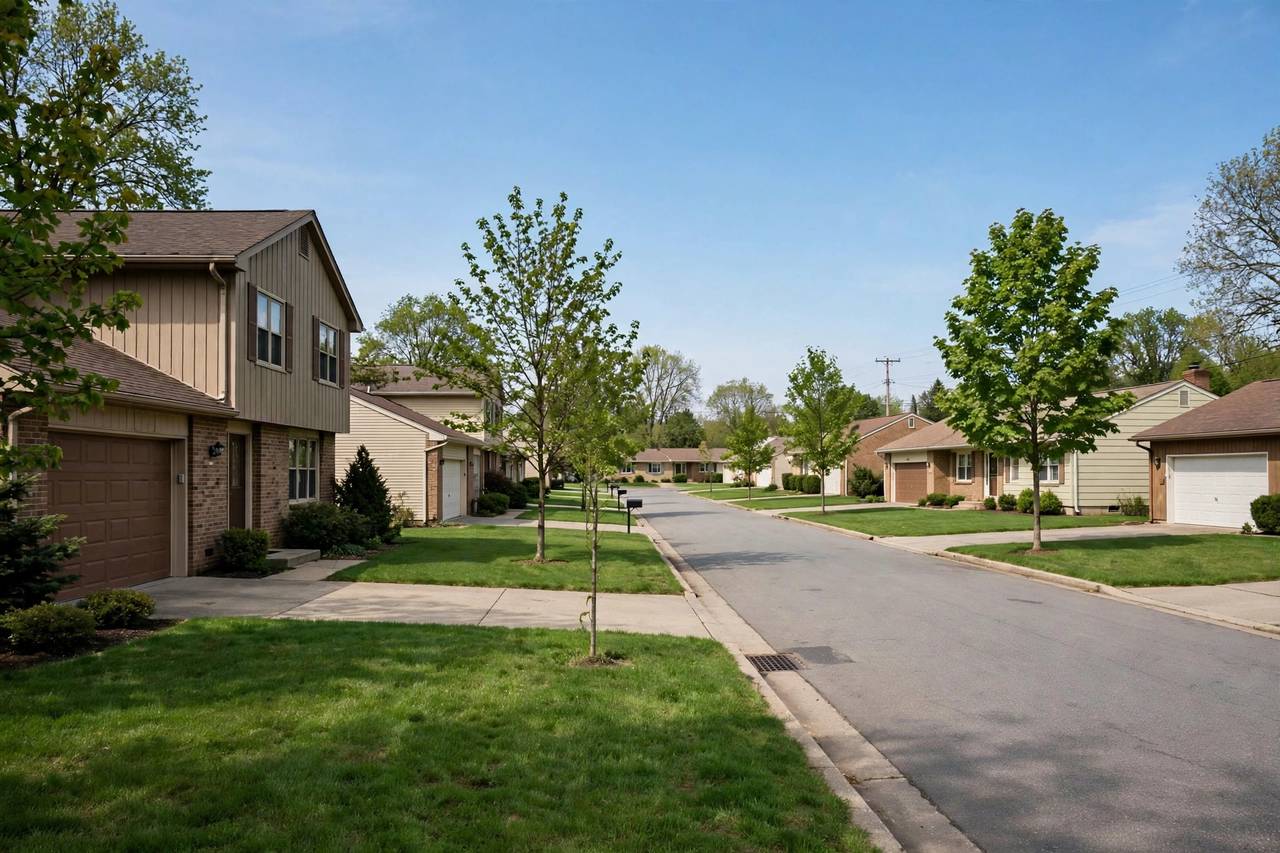
When you need drain cleaning in Cumru Township on the Mohnton side, the picture is different from the borough a few minutes away. These are subdivision homes: post-war ranches, split-levels, and 1970s to 2000s colonials, almost all with full basements. The drains here clog for modern reasons more than old-pipe reasons. Long branch lines let grease cool and settle, busy bathrooms shed hair and soap scum every day, and laundry rooms in the basement push lint through standpipes that narrow year by year. Many of these clogs clear in a single visit, the tech says so when one will not, and a technician experienced in drain cleaning in Cumru Township reads a subdivision house like a map.
Subdivision basements on the Mohnton side
The Mohnton side of Cumru Township grew in waves. The first wave was the post-war ranch: one story, a full basement underneath, two or three bedrooms, and a single bath. Then came split-levels and two-story colonials from the 1970s through the 2000s, with more bathrooms, bigger kitchens, and basements that often got finished into family rooms, offices, or guest space. The lots are wider than in the borough, the streets curve instead of gridding, and the yards hold landscaping trees that are now reaching maturity.
Plumbing materials follow the construction era. Post-war homes may still carry cast iron or galvanized lines in places, while the later subdivisions were built with plastic drain pipe inside the house. Either way, the layout is what drives the calls: bathrooms clustered on the upper floors, kitchens at the back of the house with long branch runs to the stack, and laundry down in the basement. A finished basement adds a bathroom and sometimes a wet bar, which means more fixtures sharing the same main line and a lower level that suffers first when that line slows.
Basements are the constant. Nearly every home here has one, finished or not, and it holds the floor drain, the laundry standpipe, the cleanout, and the lowest fixtures in the house. Garbage disposals are common in these kitchens, and dishwashers discharge through the same branch line, so kitchen clogs here usually involve a mix of ground food waste and grease. These subdivisions sit on the Mohnton side of the township, and the technicians who serve them know which streets hold post-war ranches and which hold the newer two-stories. If you are looking for a drain cleaner in Cumru Township, it helps that the person on the phone already knows what your basement looks like.
Mapping the symptoms to a subdivision layout
The technician starts by mapping the symptoms to the layout. Which fixtures are slow, which gurgle, and whether the lowest drains are involved tells them whether to aim at a branch or at the main. In these homes the cleanout is usually easy to find, in the basement on the street-facing wall or in the front yard, and a quick look there shows whether the main is holding water.
For bathroom clogs the tech checks the stopper and trap first, because the simplest fix lives there. For kitchen clogs the question is how far down the branch the restriction sits, and for laundry overflows the standpipe and the line below it. On any repeat clog, or whenever several fixtures are involved, a camera inspection settles the question of what is actually inside the pipe: buildup, roots, or a structural problem each point to a different answer.
Bathrooms, kitchens and laundry: the subdivision call list
Bathrooms lead the call list. Hair and soap scum build up in tub and shower drains a little at a time, and in homes with teenagers or long hair the buildup wins faster. Pop-up stoppers in bathroom sinks catch their own share. When a tub gurgles as the toilet flushes, the branch line is telling you it is narrowing, and that warning usually arrives weeks before the real backup.
Kitchens come next. The long branch run from a back-of-house kitchen gives grease plenty of distance to cool and coat the pipe interior, and disposal waste adds bulk that settles into the coated line. Dishwasher water backing into the sink is the classic sign that the shared branch is restricted. Laundry is the third regular: lint slides past the standpipe opening and collects below, and modern washers discharge faster than the standpipe was built for, so overflows during the pump cycle are common.
The main line is quieter here than in the borough but not silent. Landscaping trees planted when the subdivisions went up are old enough now for their roots to reach laterals, and a main line that has never been camera-checked can surprise a homeowner with its first backup. A clogged drain in Cumru Township that affects several fixtures at once is a main-line signal, and it deserves the same quick response as any other.
Check availability in Cumru Township
How a Cumru Township visit runs
You call and describe what is happening: which fixtures, when it started, whether water is coming up anywhere. The dispatcher asks a few follow-up questions and sends a local technician. The tech arrives, confirms the symptoms, and explains the plan and the pricing before any work begins. Nothing starts until you approve the price. Once the line is flowing, you get a plain explanation of what was found and what to watch for.
Where else the same pros work
Subdivision calls here most often end with bathroom drain cleaning, main line drain cleaning, or hydro jetting for grease-heavy kitchen and laundry runs. The same local pros provide drain cleaning in Mohnton Borough and drain cleaning in Brecknock Township, plus drain cleaning in Gouglersville just to the north, and the home page covers drain cleaning in Mohnton, PA across the whole Mohnton area.
Drain cleaning in Cumru Township: common questions
My finished basement has a bathroom. What happens if the main line backs up?
The lowest fixture takes the water first, which in a finished basement is often the basement shower or toilet. That makes a main-line backup messier and more urgent here than in an unfinished basement. Stop using water right away and call. A technician clears the main line from the cleanout and can then check whether the basement fixtures were affected.
Are subdivision homes in Cumru Township prone to main line clogs?
They are less prone to the root problems of the oldest clay tile, but they have their own patterns: long branch lines that let grease cool and settle, laundry lint collecting in standpipes, and landscaping trees whose roots reach the lateral after a couple of decades. Subdivision homes clog for modern reasons, mostly buildup rather than crumbling pipe.
Why does my shower gurgle when the toilet flushes?
Gurgling means air is being pushed through a trap because water cannot move freely past a partial blockage downstream. In subdivision homes this often traces to hair and soap scum in narrowed branch lines, or a venting quirk that shows up when several fixtures share a run. It is an early warning, not yet an emergency, and a good reason to call before it becomes a backup.
Can a garbage disposal clog my kitchen drain?
It can contribute. A disposal grinds food into fine particles that still have to travel the branch line, and in longer subdivision runs those particles mix with grease and settle. Running cold water before, during and after use helps move waste through. If the same sink keeps clogging despite careful habits, the branch line itself may need clearing or a camera look.
Is hydro jetting an option for my subdivision home?
It often is. Hydro jetting scours grease and scale off the inside of sound pipe, which suits the long kitchen and laundry runs common in these homes. A camera inspection first confirms the pipe is intact enough to jet, since jetting is not suitable for fragile or broken pipe. Your technician can explain whether jetting or simple cabling fits your situation.
Where is my main line cleanout?
In most post-war and newer subdivision homes the cleanout is in the basement, often on the wall facing the street, or in the front yard near the foundation. Some homes have one in a laundry room or utility area. If you cannot find it, the technician will locate it on arrival or work through another access point.
Why does my laundry standpipe overflow during the wash cycle?
Modern washers discharge water faster than older standpipes were sized for, and lint narrows the opening over time. The result is water rising and spilling during the pump cycle. Clearing the standpipe and the line below it usually fixes it, though a badly undersized or kinked standpipe may need a different correction than clearing alone.
Do I need a camera inspection if this is my first clog?
Usually not. A first-time clog in a subdivision home is most often a simple buildup issue and clears straightforwardly. A camera inspection earns its keep when clogs repeat, when multiple fixtures back up together, or when clearing does not restore full flow. The technician will tell you honestly whether a camera look is warranted.