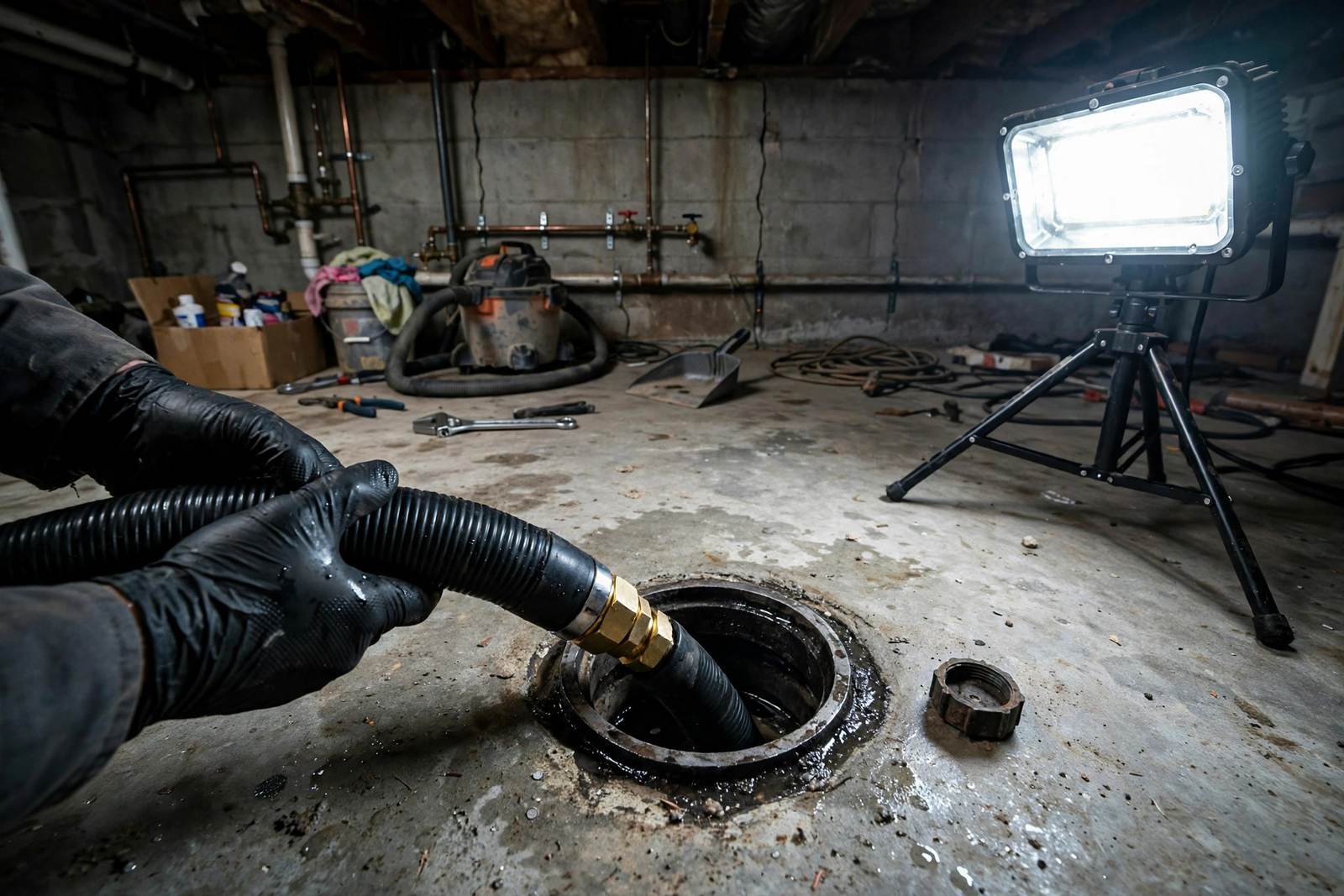
- What it is: high-pressure water cleaning that scrubs grease, scale and root build-up off the full pipe wall.
- Honest fit: the line is checked with a camera first, because jetting is not the right call for every pipe.
- How to start: calls answered 24/7, with pricing explained on the phone before any work begins.
Hydro jetting in Mohnton is a different kind of drain cleaning. Instead of cutting a narrow path through a blockage the way a cable does, a jetting hose feeds a special nozzle into the line and sprays high-pressure water in every direction, scrubbing the inside walls of the pipe as it moves. When a kitchen line keeps reclogging with grease or a main line narrows with scale and roots, opening a small hole rarely holds for long. Jetting flushes the whole diameter of the pipe toward the open end, so the build-up that was narrowing the line goes with the flow.
We connect Mohnton homeowners with experienced local drain cleaning pros who use jetting where it fits and tell you straight when it does not. Clearing the clog and finding why it keeps clogging are different jobs, and jetting sits squarely in the second one. A hydro jetting drain cleaning visit starts with questions, not water: what backs up, how often, and what the line is made of.
Talk to a drain cleaning pro now
What hydro jetting does inside a drain line
A jetting nozzle does two jobs at once. The forward jets break apart the blockage ahead, and the rear jets pull the hose forward while scouring the pipe walls behind it. That rear spray is the part cabling cannot copy: it washes softened grease, loosened scale and cut root hairs back toward the drain opening, so the line is rinsed instead of just pierced. The technician works the hose back and forth in sections, checking flow between passes until water moves the way it should.
Pressure and nozzle choice change with the job. A greasy kitchen branch line needs a different pattern than a main line carrying root hairs, and the technician sets the machine to match what the camera showed. Water jetting sewer line work always starts from a cleanout or another direct access point, never by forcing the hose down through a fixture. If your home does not have a cleanout, the technician will find another safe entry point or explain what that means for the visit.
Hydro jetting vs. cabling: which one fits your clog
Cabling, the classic drain snake, spins a cutting head through the line and punches a channel through the blockage. It restores flow, and for a single soft clog it is often all you need. What it leaves behind is the rest of the story: grease still coats the walls, scale still narrows the diameter, and roots still hang in the joints. That leftover build-up is why some drains clog again within weeks of a cable visit.
Jetting answers a different question. Where cabling asks "can water get through," jetting asks "how clean is the pipe." A line that has been jetted has its full diameter back, which gives you the best starting point a drain can have. It is also the heavier tool, so it is used when the build-up is the problem: layered grease, hard scale, root intrusion that a cable only pokes through. The trade-off is honest: jetting is the heavier tool and needs a sound pipe, and the pro explains the pricing difference before work starts, which is why the camera goes in first.
Hydro jetting, cabling and camera work side by side
| Method | What it does | Best for | Its limits |
|---|---|---|---|
| Cabling | Cuts a path through the blockage and restores flow | Single soft clogs that need clearing fast | Leaves build-up on the pipe walls |
| Hydro jetting | Scrubs the full pipe wall with pressurized water | Grease, scale and root build-up coating the walls | Not right for fragile or broken pipe |
| Camera inspection | Shows the inside of the pipe on video | Repeat clogs, unknown blockages, before jetting | Diagnoses only; clears nothing by itself |
Grease, scale and root build-up that jetting clears
Grease is jetting's signature job. Kitchen lines in Mohnton collect it layer by layer: cooking fat that went down hot, hardened onto cool pipe walls, then caught food particles and starch on top. A cable bores a tunnel through it and the tunnel slowly closes again. Jetting peels the layers off the wall and flushes them out, which is why kitchen lines that kept reclogging often settle down after a thorough jetting pass. Jetting grease and roots out of a line works the same way on the main: the water cuts what it can and carries it away.
Scale is the mineral crust that forms inside older metal lines, roughening the walls so everything catches. Roots are the third target: fine root hairs slip through pipe joints looking for water, then thicken into a net that grabs everything passing by. Jetting shears those hairs off and flushes them out, but it cannot seal the joint they came through. That honesty matters: after jetting roots, the camera tells you whether the entry points are small enough to watch or worth a longer conversation with a plumber.
When hydro jetting is not the right call
High-pressure water in a weak pipe is a bad idea, and a straight-talking technician says so. Clay and cast iron lines in older homes can be brittle, and sections that are cracked, offset or collapsed should not be jetted. Pipes with bellies, low spots where water sits, also gain little from jetting because the water simply pools there. This is not a sales obstacle; it is the reason the camera inspection comes first, and it is why we never claim jetting is safe for every pipe.
There are also simpler cases where jetting is more than you need. A bathroom sink clogged with hair, a toilet blocked by a single flush, a one-off kitchen slowdown: cabling or targeted clearing handles those without bringing out the jetter. If the clog is at the lowest drain in the basement rather than the line itself, our floor drain cleaning page explains how that visit works. The right tool is the smallest one that does the job well.
Why the camera goes in before the jetting hose
Before any water goes in, most pros start with a drain camera inspection so they know the pipe can take the pressure. The video shows the pipe material, the condition of the walls, and exactly where the build-up sits, which tells the technician which nozzle to choose and how much pressure the line should see. It also protects you: if the camera finds damage, you hear about options before money is spent on jetting that would not help.
After jetting, many technicians run the camera once more. That second look is your proof of what the work achieved: clean walls where grease used to hang, joints that are clear of root hairs, water moving freely. Keep what you see in mind, because it sets the baseline for anything that happens later. If a clog returns, the next camera run can be compared against a clean starting point instead of a guess.
Hydro jetting for Mohnton homes
Mohnton's housing mix decides where jetting earns its keep. In the borough, older homes with basements carry clay and cast iron laterals shaded by mature street trees. Those are the lines where roots find joints and grease layers onto rough walls, and jetting is a strong answer only after the camera confirms the pipe is sound. Borough homes with older clay lines see this pattern often; read how older lines behave on our drain cleaning in Mohnton Borough page.
On the Cumru Township side, post-war through 2000s subdivisions carry smoother plastic lines that take jetting well, and kitchen branch lines there clog with grease the same way everywhere else. Many of the jetting visits we connect come from these subdivision homes; the drain cleaning in Cumru Township (Mohnton Side) page describes what those basements and lines typically look like. On the Brecknock side, newer and rural homes often have septic systems: jetting still works on the indoor drains, the work is drain clearing only up to the cleanout, and the technician will say plainly where that boundary sits. Long rural runs around the Gouglersville crossroads collect grease the same way; the drain cleaning in Gouglersville page covers those homes.
While you wait: what you can do before the pro arrives
- Hold off on showers, laundry and the dishwasher until the line is cleared, so no more water stacks up behind the clog.
- Do not pour chemical drain cleaner down the line. It can harm pipes and it endangers the technician who opens the cleanout.
- Keep children and pets away from backed-up water.
- Move valuables away from the basement floor drain, the lowest point in the system.
- Note which fixtures are affected and when it started. That history speeds the diagnosis and tells the technician whether jetting is even the right tool.
Hydro jetting questions from Mohnton homeowners
Is hydro jetting safe for old pipes?
It depends on the pipe. A camera check comes first on older clay or cast iron lines, because jetting is not safe for every pipe. If the video shows a sound line, jetting can go ahead. If it shows cracks or broken sections, the technician will explain other options.
Does jetting remove roots?
Jetting cuts and flushes small root intrusions back out of the line. It cannot fix the entry point, so roots may grow back through the same joint. That is why we never promise a clog will not return. A camera check after jetting shows what is left.
How long do the results of jetting last?
There is no fixed answer. A freshly flushed line stays clear longest when grease, wipes and lint stay out of it. Heavy use or damaged pipe shortens that. What jetting does give you is a clean pipe wall, which is the best starting point you can get.
Is jetting better than snaking?
Neither is better in every case. Cabling punches through a blockage and restores flow; jetting scrubs the pipe walls clean around the full diameter. Grease and scale respond to jetting; a single soft clog may only need a cable. A good technician matches the tool to what the line shows.
Can jetting be done through a sink?
Usually not through the fixture itself. Jetting works from an access point like a cleanout so the hose and nozzle can reach the line directly. A technician will look for the right entry point before quoting the work.
How messy is jetting?
Most of the action stays inside the pipe, with water running out through the drain to the far end. The work area around the access point gets some splash and is cleaned up after. Your technician lays down protection where the hose enters.
Why check with a camera first?
The camera shows what the line is made of, how sound it is, and exactly where the build-up sits. That tells the technician whether jetting is safe and which nozzle to use. It also gives you proof of what the line looked like before and after.
How often should a drain line be jetted?
There is no schedule that fits every home. Lines that clog again within weeks or months may benefit from jetting once the cause is found on camera. Lines that run fine may never need it. Ask the technician what the video showed; that is the honest answer.