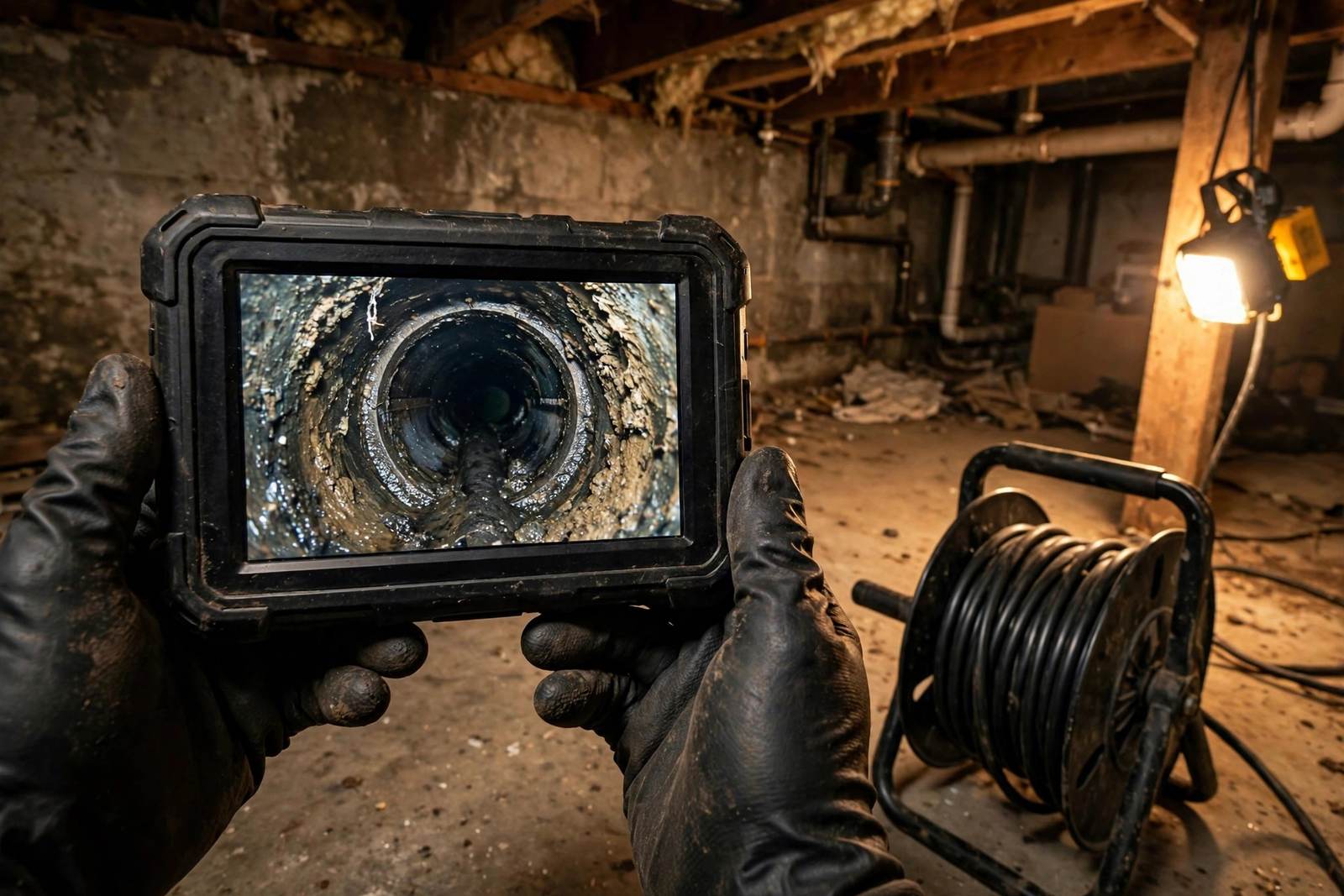
- What it is: a waterproof camera on a push rod shows the inside of your drain line on a monitor you can watch.
- Why it matters: repeat clogs are a symptom. The video finds the cause, roots, bellies, offsets, cracks, so the fix fits.
- How to start: calls answered 24/7, with pricing explained on the phone before the visit.
A drain camera inspection in Mohnton puts eyes inside a pipe you will never see yourself. A small waterproof camera rides a flexible push rod from a cleanout or another access point, and the picture comes up on a monitor in real time. You watch the same screen the technician watches: the pipe walls, the joints, and whatever is sitting in the line. Clearing a drain and finding why it keeps clogging are different jobs, and the camera is the tool that connects them.
We connect Mohnton homeowners with experienced local drain cleaning pros who use video pipe inspection to diagnose before they treat. When the picture shows a grease narrowing, the answer is cleaning. When it shows a broken joint, the answer is something no drain cable can fix, and you deserve to know that before anyone quotes clearing work. One call starts it: (610) 702-9177.
Speak with a local drain cleaning tech
When a drain camera inspection makes sense
The number one reason is the repeat clog. A drain that has been cleared twice and clogs again is telling you the blockage was never the whole story. A drain line camera turns that story visible: the grease shelf where the cable only bored a tunnel, the root hairs hanging through a joint, the belly where water sits and debris settles. Once you can see the cause, the fix stops being guesswork.
Other moments call for the camera too. Water backing up in the lowest fixtures while the rest of the house seems fine points at the main line, and the video shows whether it is build-up or damage. A home purchase is another: sewer camera inspection before closing can reveal roots and offsets in a line no walkthrough will ever show. And after heavy clearing work like jetting, a follow-up pass proves the walls are actually clean.
What the video shows: roots, bellies, offsets, cracks and build-up
Roots show up as pale, hair-like strands pushing through joints, sometimes thickening into a net that catches paper and waste. Bellies are low sags in the line where the camera seems to swim; water and debris sit there between uses. Offsets are joints that have shifted so one pipe edge sticks into the flow, a perfect snag point. Cracks and breaks show as dark splits with soil or roots pressing in.
Build-up has its own look. Grease coats the walls in lumpy yellow-gray layers that narrow the pipe. Scale crusts older metal pipe with a rough orange-brown texture. Soap and lint paste themselves into smooth drifts. The technician reads these textures the way a mechanic reads an engine sound, and narrates what you are seeing as the camera travels. What the video cannot do is fix anything; diagnosis and clearing are separate steps, and the camera makes sure the clearing step is the right one.
Finding the exact spot of the problem
| Question | What the camera answers | What you can do with it |
|---|---|---|
| What is it? | Roots, grease, offset joint, belly, crack, or plain build-up | Choose cleaning, jetting, or a repair referral |
| Where is it? | Distance from the access point, marked from above with a locator | Know how much line is involved before quoting work |
| How bad is it? | How much of the diameter is blocked or damaged | Decide whether to watch it, clear it, or plan further |
| Is the pipe sound? | Wall condition along the whole run, not just the clog | Judge whether jetting is safe for this line |
Knowing where the trouble sits changes the conversation. A grease clog three feet from the cleanout is a simple visit. Root intrusion forty feet out under the yard is a different discussion, and the locator mark on the lawn is where that discussion starts. Without the camera, every clog is just "somewhere down the line." With it, you have footage, a location and a plan.
Inspection after repeat clogs
Repeat clogs are where the camera earns its keep. The first clog gets cleared. The second clog gets cleared again, maybe with a different tool. The third clog is when a smart homeowner asks why, and the camera is the answer. In Mohnton's older homes, the repeat offender is usually roots at a clay joint or grease layered on rough cast iron. In newer subdivision homes, it is often a belly in the line or a wad of wipes that survived the cable.
If the lowest drains in the house are the ones backing up, the camera may also reveal that the problem is the main line rather than any fixture. Our floor drain cleaning page explains how those visits start, and an inspection is often the second step when the floor drain keeps taking the hit. When the pattern is urgent instead, a middle-of-the-night backup, our emergency drain cleaning page covers what to do first.
Buying a home in Mohnton: why a camera check helps
A home inspector walks the house, runs the fixtures and checks what is visible. The drain line is not visible. On the borough's older streets, a clay or cast iron lateral may have carried roots for years without a single backup inside the house, because a slow partial blockage can hide until a heavy-use day. A camera run before you buy turns that unknown into a known.
Bring the question up while you still have negotiating room. A video showing clean walls is peace of mind worth the visit. A video showing root intrusion or a collapsed section is information you can take to the seller. Either way, you are buying the house with your eyes open, and that includes the parts buried under the yard.
Camera inspection for Mohnton homes
Mohnton's housing eras give the camera different things to find. Borough homes from the early and mid 1900s carry clay and cast iron laterals under mature street trees, and the camera's most common find there is roots at the joints, followed by scale inside the cast iron. What to expect in that part of town is covered on our drain cleaning in Mohnton Borough page, and subdivision basements on our drain cleaning in Cumru Township (Mohnton Side) page. The camera does not care which era it is, but the footage reads differently.
Post-war through 2000s subdivision homes usually have smoother plastic lines, where the camera more often finds bellies, grease shelves in kitchen branches, or construction debris that was never flushed out. On the Brecknock side, newer and rural homes often run on septic: the camera inspects the indoor drains up to the cleanout, and drain clearing stops there. Our drain cleaning in Brecknock Township page explains that boundary in plain terms.
While you wait: getting ready for the inspection
- Run as little water as you can before the visit; the camera sees more in a line that is not full.
- Do not pour chemical drain cleaner down the line. It can harm pipes and it endangers the technician who opens the access point.
- Clear a path to the cleanout or the basement floor drain so the equipment rolls straight in.
- Note which fixtures are affected and when the trouble started. That history tells the technician where to point the camera first.
- Have your questions ready: you will be watching the monitor, and that is the moment to ask what you are seeing.
Drain camera inspection questions from Mohnton homeowners
What does a drain camera inspection show?
It shows the inside of the drain line in real time: roots, grease and scale build-up, cracked or offset joints, bellies where water sits, and the pipe material itself. You watch the same screen the technician watches. That picture replaces guessing about what is down there.
Do I get to see the video?
Yes. The inspection runs on a monitor you can watch live, and most technicians can save the footage for you to keep. Ask for the recording before the visit starts so nothing is missed. It is useful if you ever need a second opinion.
Can the camera find where the problem is?
Yes, in two ways. The video shows what the problem looks like, and a locator on the camera head lets the technician mark the spot from above ground. That tells you how far down the line the trouble sits, which is what any repair plan starts from.
Is a camera inspection worth it before buying a house?
Many buyers think so, especially with older homes. Drain lines are one of the few parts of a house you cannot see on a walkthrough. An inspection shows roots, offsets and build-up before you own the problem, while you still have negotiating room.
How long does a drain camera inspection take?
It usually fits inside a routine service visit. The technician feeds the camera through an access point and walks the line at a steady pace, stopping where something looks wrong. When you call, the dispatcher will explain what to expect for your setup.
Can the camera go through a toilet?
A cleanout is the preferred entry point, but a pulled toilet can work as access when there is no cleanout. The technician removes the toilet, runs the camera, and resets it after. It adds labor, so it is a backup plan rather than the first choice.
What happens if the camera finds damage?
You see exactly what the technician sees, and you get a plain explanation of what it means. Minor issues get watched or cleared; structural damage gets referred out, since line excavation and replacement are outside drain cleaning. Nothing is decided without you seeing the footage first.
Does a clog need to be cleared before the camera goes in?
Sometimes, yes. A camera cannot see through standing water or a solid blockage, so a badly clogged line may need a cable pass first. In many cases the inspection happens during the same visit, right after flow is restored, so you get the diagnosis and the evidence in one trip.